When multiple teeth have been damaged, worn down, fractured, or lost, treating one tooth at a time may not be enough to restore a healthy, functional smile. In these situations, a full mouth reconstruction may provide a more comprehensive approach.
At Raleigh Prosthodontics, full mouth reconstruction involves carefully planning and coordinating multiple restorative procedures to rebuild the teeth, improve function, and address underlying bite or structural concerns. Unlike a cosmetic “smile makeover,” full mouth reconstruction is generally intended to address significant dental problems and restore oral function.
What Is Full Mouth Reconstruction?
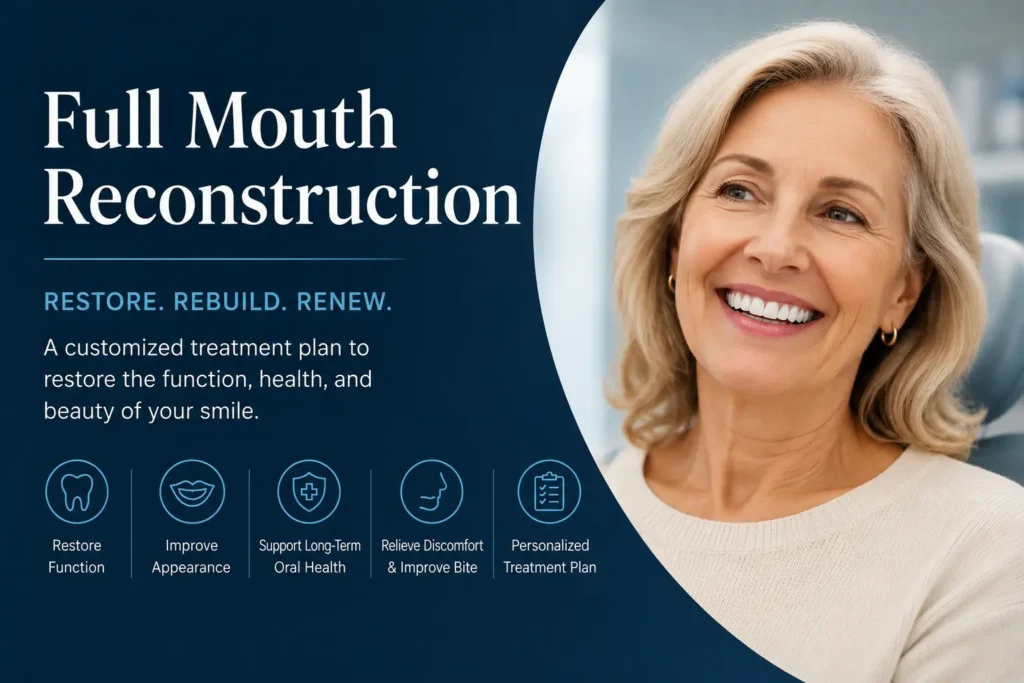
Full mouth reconstruction is a customized treatment plan designed to restore the teeth throughout the mouth. Rather than focusing on a single damaged tooth or isolated cosmetic concern, the process considers how the teeth, gums, bite, jaw, and supporting structures work together.
The specific treatments involved depend on each patient’s dental needs. Some patients may need several restorative procedures, while others may require additional treatment to address the position of the teeth, gums, jaw, or supporting bone.
Because every case is different, treatment typically involves careful planning, multiple appointments, and periods of healing along the way.
Who May Benefit From Full Mouth Reconstruction?
Full mouth reconstruction may be considered when extensive dental problems have affected multiple teeth or the way the mouth functions.
Reasons someone may need comprehensive reconstruction can include:
- Multiple missing teeth
- Teeth that have been fractured or significantly injured
- Extensive tooth wear caused by acid erosion
- Bite problems that contribute to jaw discomfort or pain
- Significant damage requiring multiple teeth to be restored
The goal is to develop a treatment plan that addresses the patient’s specific concerns rather than applying the same approach to everyone.
What Procedures Can Be Part of a Full Mouth Reconstruction?
There isn’t one specific procedure that defines full mouth reconstruction. Instead, a prosthodontist evaluates the patient’s needs and determines which combination of treatments can provide the best foundation for restoring the mouth.
Depending on the situation, treatment may include:
Crowns and Bridges
Damaged or weakened teeth may be restored with dental crowns, while bridges can be used to replace certain missing teeth and restore continuity to the smile.
Veneers, Inlays, and Onlays
Depending on the amount and type of damage, veneers, inlays, or onlays may be appropriate for restoring individual teeth while preserving as much healthy tooth structure as possible.
Dental Implants
When teeth are missing, dental implants may be incorporated into a larger reconstruction plan. Bone or soft-tissue grafting may sometimes be necessary to provide adequate support for teeth or implants.
Gum and Supporting Tissue Treatment
Some patients require gum contouring, crown lengthening, or bone and soft-tissue grafting as part of the overall reconstruction.
Bite and Jaw Treatment
A healthy smile depends on more than the appearance of the teeth. The way the upper and lower teeth come together can affect comfort and function. In some cases, treatment may include bite adjustments, temporary restorations, orthodontics, or even jaw surgery when indicated.
Why Treatment Planning Matters
When multiple teeth need to be restored, the order and coordination of treatment can be just as important as the individual procedures.
For example, teeth may need to be repositioned before permanent restorations are placed. Temporary restorations may also be used to allow a patient to become accustomed to a new bite or tooth arrangement before permanent restorations are completed.
A prosthodontist can evaluate the condition of the teeth and supporting structures and develop a treatment sequence designed specifically for the individual patient. Raleigh Prosthodontics notes that other dental specialists may also be involved when their expertise is needed.
Full Mouth Reconstruction vs. a Smile Makeover
Although the two terms may sometimes be confused, they have different purposes.
A smile makeover is generally focused on improving the cosmetic appearance of the smile. Full mouth reconstruction, on the other hand, is intended to address significant dental problems and restore the health, function, and structure of the mouth.
A full mouth reconstruction may certainly improve the appearance of a patient’s smile, but the treatment begins with the goal of restoring function and addressing the underlying dental concerns.
What Can You Expect During the Process?
Because full mouth reconstruction is highly individualized, treatment length varies from patient to patient.
The process may involve multiple office visits as different procedures are completed and the mouth has time to heal. Temporary restorations may be used during treatment, and the final restoration phase is completed once the necessary preparations and healing have taken place.
The first step is a comprehensive evaluation. From there, the prosthodontist can explain the recommended treatment options and develop a plan based on the condition of your teeth, gums, bite, and supporting structures.
Rebuilding More Than a Smile
Extensive dental problems can affect much more than appearance. Damaged or missing teeth can make everyday activities such as eating and speaking more difficult, while bite problems can contribute to discomfort.
Full mouth reconstruction takes a comprehensive approach to these concerns by considering the mouth as a whole rather than treating each problem in isolation.
If you have multiple damaged, worn, fractured, or missing teeth, a prosthodontic evaluation can help you understand what treatment options may be available.
Contact Raleigh Prosthodontics to schedule a consultation and learn whether full mouth reconstruction may be appropriate for your dental needs.